

Deadline reveals its “Top 10 Films of 2025,” but the list raises questions about bias, omissions, and whether prestige still outweighs popularity.
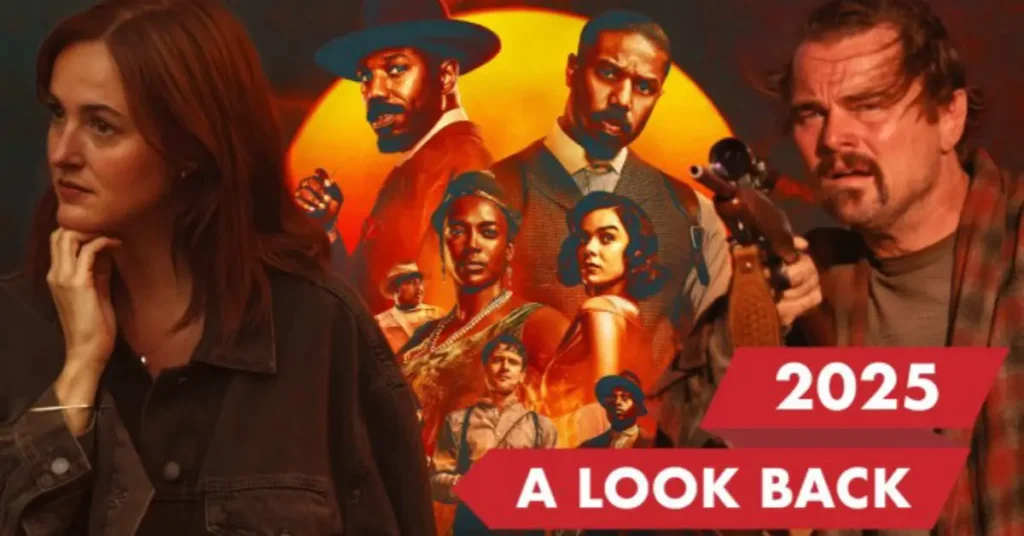
Deadline’s Critics Pick Their Top 10 Films of 2025 is impressive, thoughtful, and packed with serious filmmaking talent.
Pete Hammond and Damon Wise clearly watched widely and deeply, and their lists are full of bold choices, international cinema, and ambitious storytelling. That said, no “Top 10” list is ever neutral — and this one raises a few important questions about taste, accessibility, and what kinds of movies still struggle to be taken seriously by critics.
First, it’s clear the list leans heavily toward prestige cinema. Films like Hamnet, Sentimental Value, Train Dreams, and Sound of Falling are undeniably artful and emotionally rich, but they also reflect a very specific critical preference: quiet suffering, literary adaptations, fractured timelines, and melancholy tones. These films are rewarding, but they’re not always engaging for general audiences. That raises the question — should a “Top 10 Films of the Year” reflect only artistic ambition, or also cultural impact and audience connection?
Take Sound of Falling, for example. Damon Wise praises its abstract mood and instinctual storytelling, comparing it to Brian Eno and David Lynch. That’s high praise — but also a red flag for accessibility. Many viewers may find the film confusing, slow, or emotionally distant. Including it in a Top 10 list while leaving out more widely embraced films suggests critics may still reward difficulty over resonance.
Another noticeable trend is the overrepresentation of established auteurs. Paul Thomas Anderson, Joachim Trier, Richard Linklater, Ryan Coogler, Guillermo del Toro — all fantastic filmmakers, but all already critical darlings. Their inclusion feels almost expected. Meanwhile, movies like Wicked: For Good, F1, and Avatar: Fire and Ash are dismissed as near-misses, despite their massive cultural footprints. This raises an old but persistent issue: why do large-scale, crowd-pleasing films still struggle to be seen as “serious cinema,” even when they push technical boundaries and dominate public conversation?
Avatar: Fire and Ash is a particularly interesting omission. James Cameron’s work has always divided critics, but to ignore a film that likely redefined visual effects and box office expectations in 2025 feels like a blind spot. Innovation doesn’t always wear an arthouse label, and spectacle can coexist with meaningful storytelling.
There’s also a subtle performance bias worth questioning. Emma Stone, Michael B. Jordan, Stellan Skarsgård, and Josh O’Connor are repeatedly praised — and deservedly so — but other strong performances are barely acknowledged because the films themselves didn’t fit the critics’ preferred mold. Rose Byrne’s work in If I Had Legs I’d Kick You is highlighted, yet the film itself is framed more as a mood experiment than a fully satisfying narrative. That raises the question: should a great performance elevate a film into the Top 10, or should storytelling still come first?
Genre bias also lingers. While Sinners gets credit for blending horror, music, and history, it’s treated almost as an exception rather than a sign that genre films deserve more respect. Horror, sci-fi, musicals, and sports dramas still feel like outsiders unless they disguise themselves as prestige projects.
Finally, the list reflects a critic-centric worldview rather than a year-defining one. Films like Weapons, Wake Up Dead Man, Good Fortune, and The Long Walk are brushed aside as “just missing the cut,” yet many of these movies sparked conversation, memes, and strong fan reactions. A Top 10 list that ignores that energy risks feeling detached from how people actually experienced movies in 2025.
None of this means Deadline’s list is wrong — far from it. It’s smart, passionate, and clearly curated with care. But it does reflect long-standing critical habits: favoring solemn over joyful, subtle over bold, and familiar auteurs over emerging voices. The best film year lists don’t just tell us what critics admired — they also help us understand what truly mattered. And in that sense, Deadline’s picks may be excellent, but they’re not the whole picture.
What do you think — did Deadline get it right, or did they leave out the movies that defined your 2025?
