
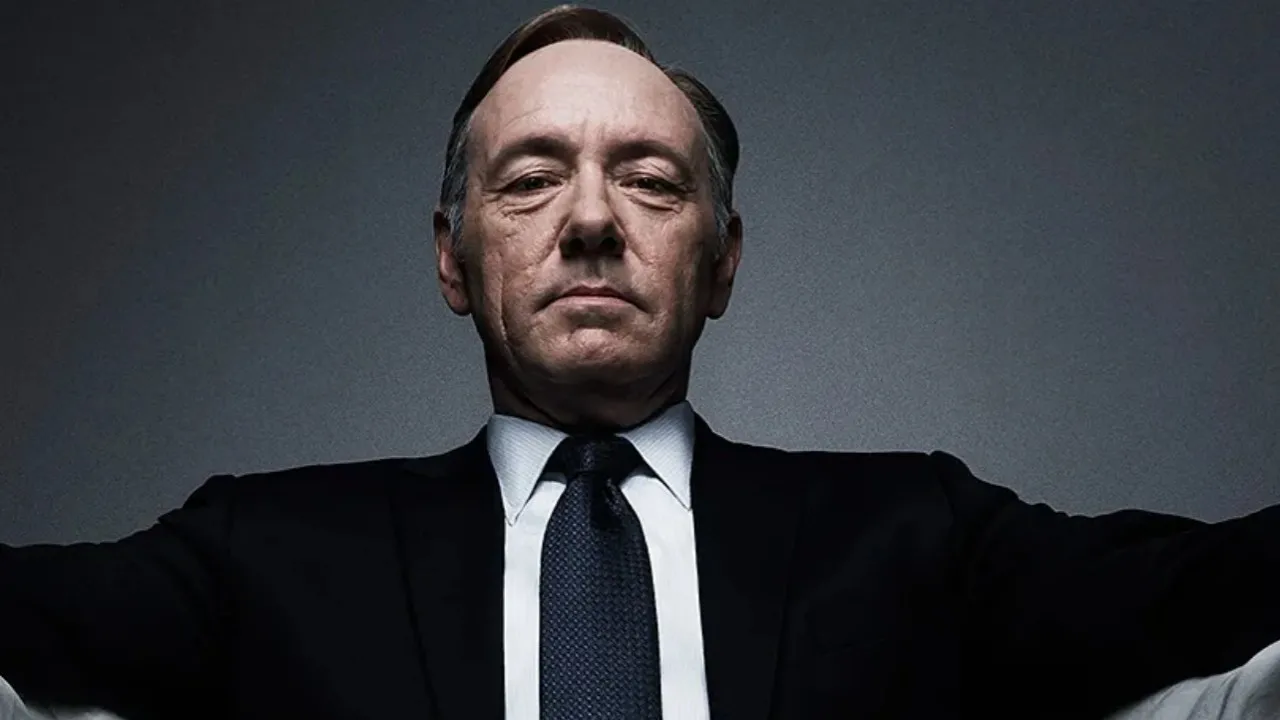
Spacey took the stand in a $100M+ insurance battle, telling a Santa Monica jury he was ready to film Season 6 — until the money math changed.
Kevin Spacey walked into a Santa Monica courtroom Tuesday looking like a man with nothing left to lose — and maybe that’s exactly why he was so candid.
The two-time Oscar winner testified in a high-stakes insurance trial that he was fully prepared to shoot the sixth and final season of House of Cards when production company Media Rights Capital abruptly cut him loose in late 2017.
His central claim: MRC didn’t fire him because he was sick. They fired him because a big insurance payout looked a lot more appealing.
“I was available, willing, and able,” Spacey said, echoing language his own lawyer had used in a November 4 letter to the production company — a letter sent just days before everything fell apart.
The case pits MRC against its insurer, Fireman’s Fund, in a dispute over who actually caused the show’s collapse. MRC is chasing more than $100 million, arguing that Spacey’s sex addiction diagnosis made him medically unfit to work.
Fireman’s Fund says that’s a convenient rewrite of history — that the real reason Spacey was cut was the media firestorm that followed Anthony Rapp’s sexual assault allegations, not any clinical condition.
Spacey, for his part, sided firmly with the insurer’s version of events.
He described checking into The Meadows, an upscale Arizona rehab facility, in late October 2017 after the allegations broke. What happened next, he said, caught him off guard. He testified that a doctor there initially told him he didn’t qualify as a sex addict.
“I only found out later that they had in fact diagnosed me as sexually compulsive,” he said. “I can personally dispute it, even if I can’t professionally.”
And then, in what might be the most eyebrow-raising detail of the day, he said the facility’s founder later asked him to become a public spokesperson for sex addiction. “It was very much obvious they wanted me to be a sex addict,” Spacey told the jury.
Meanwhile, Netflix — which had been airing House of Cards — was quietly pulling away. Before entering rehab, Spacey said he spoke with Netflix CEO Ted Sarandos through his manager, who reportedly told him the streamer considered him family and would pause production until Thanksgiving. Nothing would change, Sarandos supposedly said. They loved him. They had his back.
Over Thanksgiving, Netflix publicly cut ties with him entirely.
Spacey’s attorney argued that the sequence of events tells a clear story: the show didn’t collapse because of a medical diagnosis. It collapsed because of headlines. And if headlines are what killed House of Cards, then it’s an insurance issue — not a health one.
MRC’s lawyer, Adam Ziffer, pushed back hard, trying to establish that Spacey’s pattern of denying any wrongdoing should make the jury skeptical of his version of events. In a prior arbitration, the arbitrator found multiple crew members credible and ruled that Spacey violated his contract’s anti-harassment policies — resulting in a $31 million judgment against him.
Spacey doesn’t accept that ruling. He disputed virtually every allegation on the stand, calling one account from an anonymous accuser “an entirely made up story.” When told the legal standard for the arbitration was “more likely than not,” he shot back that it’s a “very low bar.”
There was one moment where the professional veneer cracked slightly. Spacey acknowledged that his agent, Matt DelPiano, had told MRC’s CEO that Spacey was “sick” and going away for a “very long time” — a statement that directly contradicted his own lawyer’s letter days later saying he was ready to work. Both things happened.
Both were presented to the jury Tuesday.
There were also unexpected detours. Spacey mentioned crew complaints against co-stars Robin Wright and Michael Kelly, including an alleged incident where Kelly pulled a female crew member onto a bed. The relevance wasn’t entirely clear, but it landed in the room with a thud.
The trial, which opened earlier this month, is expected to run for several more weeks.
The jury will ultimately have to decide what actually ended House of Cards — a diagnosis, a news cycle, or something messier than either side wants to admit.
