
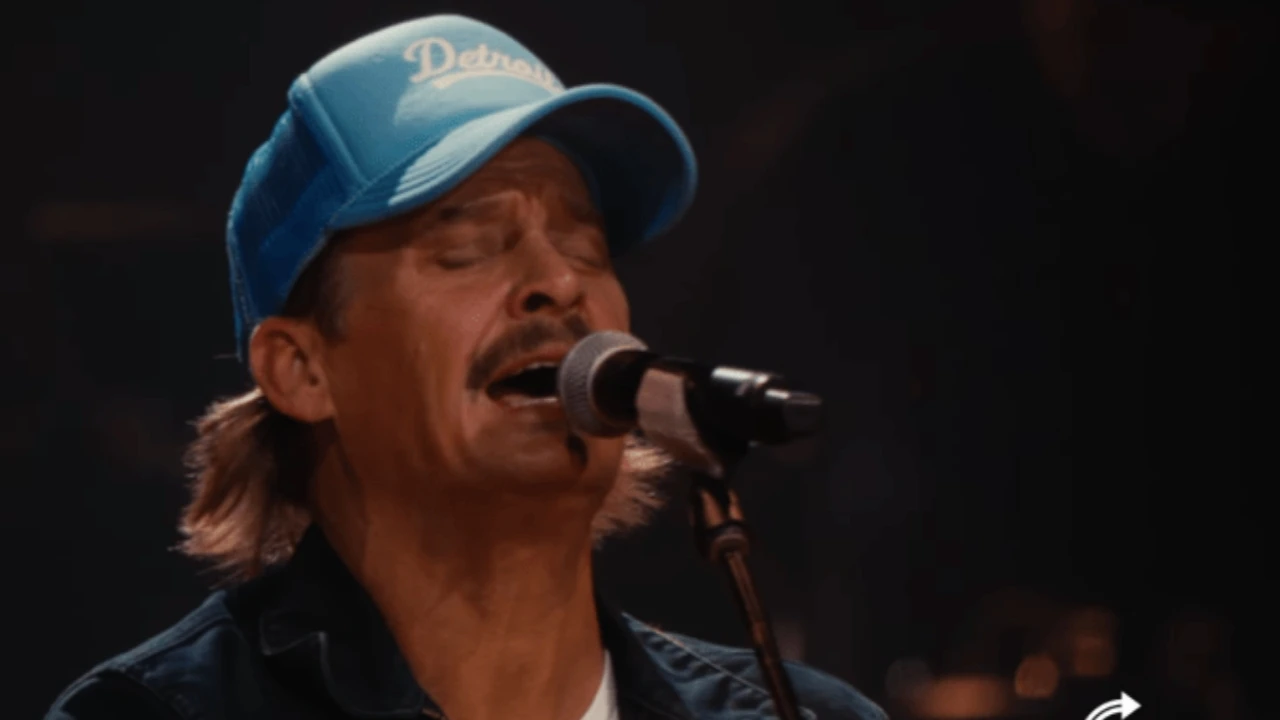
Kid Rock’s alternative halftime show aimed to celebrate patriotism, but it landed more like a calm country TV throwback than a loud protest.
When Kid Rock took the stage for the so-called All-American Halftime Show, the moment felt less like a political counterpunch and more like a blast from cable TV’s past.
Despite early buzz framing the event as a conservative response to Bad Bunny’s Super Bowl halftime performance, the 35-minute program largely avoided controversy, opting instead for familiar country sounds, light rock energy, and a heavy dose of nostalgia.
Produced with the backing of Turning Point USA, the show featured a lineup of country artists whose biggest chart moments came years ago. Brantley Gilbert opened the program, followed by Gabby Barrett and Lee Brice, before Kid Rock closed things out.
With no announcer, no visible location details, and no clear mention of the Super Bowl or its official halftime act, the broadcast felt oddly disconnected from the moment it was supposedly reacting to.
Sources later confirmed the show was pre-taped in Atlanta.
Musically, the performances stayed safely within the lines. Gilbert leaned into his usual hard-rock-meets-country style after a Hendrix-inspired take on “The Star-Spangled Banner.” Barrett delivered polished renditions of “I Hope” and “One of the Good Ones,” channeling a mainstream, Carrie Underwood-like sound.
Brice mixed crowd favorites like “Drinking Class” with a new song, “Country Nowadays,” which contained the show’s most pointed lyrics about cultural change and identity.
Even then, the political messaging was minimal compared to expectations. Brice framed his new song as personal expression rather than provocation, saying he was simply using the microphone he’d been given.
The rest of the show avoided direct commentary, with no references to Bad Bunny, the NFL, or the California stadium hosting the Super Bowl.
Kid Rock’s appearance was the most anticipated—and the most discussed online. He opened with “Bawitaba,” complete with pyrotechnics, but social media quickly zeroed in on what many viewers believed was lip-syncing during much of the performance. He appeared more present vocally during his closing number, a cover of Cody Johnson’s “Till You Can’t,” which he modified by adding a religious verse encouraging listeners to turn to Jesus.
It was the night’s most overt statement, delivered more like a reflective sermon than a rallying cry.
The show ended with a montage honoring the late Charlie Kirk, followed by images of his widow, Erika Kirk, now leading Turning Point USA. Still, even the closing credits offered little context about the production, reinforcing the sense that the event was intentionally low-key.
Online viewership told a similar story. After some confusion over where to watch—TPUSA redirected viewers from X to YouTube—the stream peaked at just over 5 million viewers when Kid Rock appeared.
Numbers dipped slightly by the end, and while the show also aired on platforms like OAN, no full audience total has been released.
For an event framed as a bold alternative to a global pop spectacle, the All-American Halftime Show ultimately felt restrained. Instead of challenging the Super Bowl’s halftime dominance, it played like a throwback country special that could have aired almost any time in the last two decades.
Fans and critics alike noted the absence of current country hitmakers, especially artists closely associated with conservative audiences. In the end, Kid Rock’s “David vs. Goliath” moment didn’t roar—it reminisced.
What did you think of the alternative halftime show? Was it refreshingly calm or just forgettable? Share your take.
