
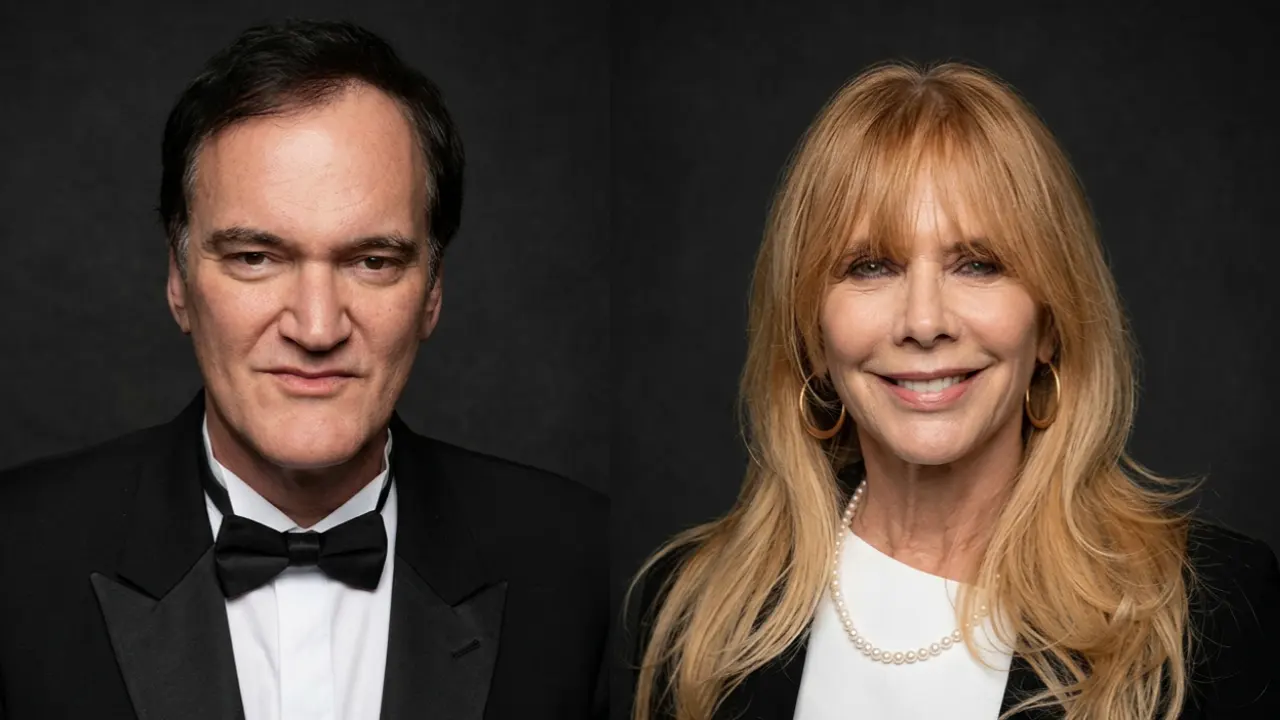
Quentin Tarantino blasts Rosanna Arquette for criticizing his films’ use of the N-word, calling her comments disrespectful and opportunistic.
The long-running debate over language in Quentin Tarantino’s movies has resurfaced—this time fueled by a sharp response from the director himself.
After Rosanna Arquette criticized Tarantino’s repeated use of the N-word in his films during a recent interview, the filmmaker fired back in a pointed letter accusing her of disrespect and opportunism.
The exchange has reopened an old cultural conversation about artistic freedom, historical context, and responsibility in Hollywood storytelling.
Arquette made the remarks while reflecting on her small role in Pulp Fiction, the influential 1994 crime film written and directed by Quentin Tarantino.
Speaking in a career-spanning interview with The Sunday Times, she acknowledged the film’s cultural impact but expressed strong personal discomfort with the racial slur appearing in Tarantino’s scripts.
“Personally I am over the use of the N-word — I hate it,” Arquette said. “I cannot stand that he has been given a hall pass. It’s not art, it’s just racist and creepy.”
Arquette played Jody, the wife of a drug dealer portrayed by Eric Stoltz, in scenes opposite John Travolta’s character Vincent Vega.
Though her appearance in the film was brief, her criticism quickly spread online and across entertainment media.
Tarantino responded Monday with a letter addressed directly to the actor, accusing her of publicly attacking a project she once embraced.
“I hope the publicity you’re getting from 132 different media outlets writing your name and printing your picture was worth disrespecting me and a film I remember quite clearly you were thrilled to be a part of,” Tarantino wrote.
He suggested her comments might be driven by attention rather than principle, adding that speaking negatively about the film after accepting the role and payment showed “a decided lack of class, no less honor.”
The dispute taps into a criticism Tarantino has faced for decades. His films frequently include explicit language tied to their characters and settings.
Critics often point to Django Unchained, his 2012 Western about slavery, where the racial slur appears more than 100 times.
But the director has also had defenders within his own casts. Actors such as Jamie Foxx, who starred in Django Unchained, and longtime collaborator Samuel L. Jackson have previously argued that the language reflects historical reality and character authenticity rather than personal endorsement.
The latest exchange shows how debates over representation and language in film continue to evolve—even for movies released more than 30 years ago.
As audiences revisit classic titles like Pulp Fiction, the conversation around them appears far from settled.
