
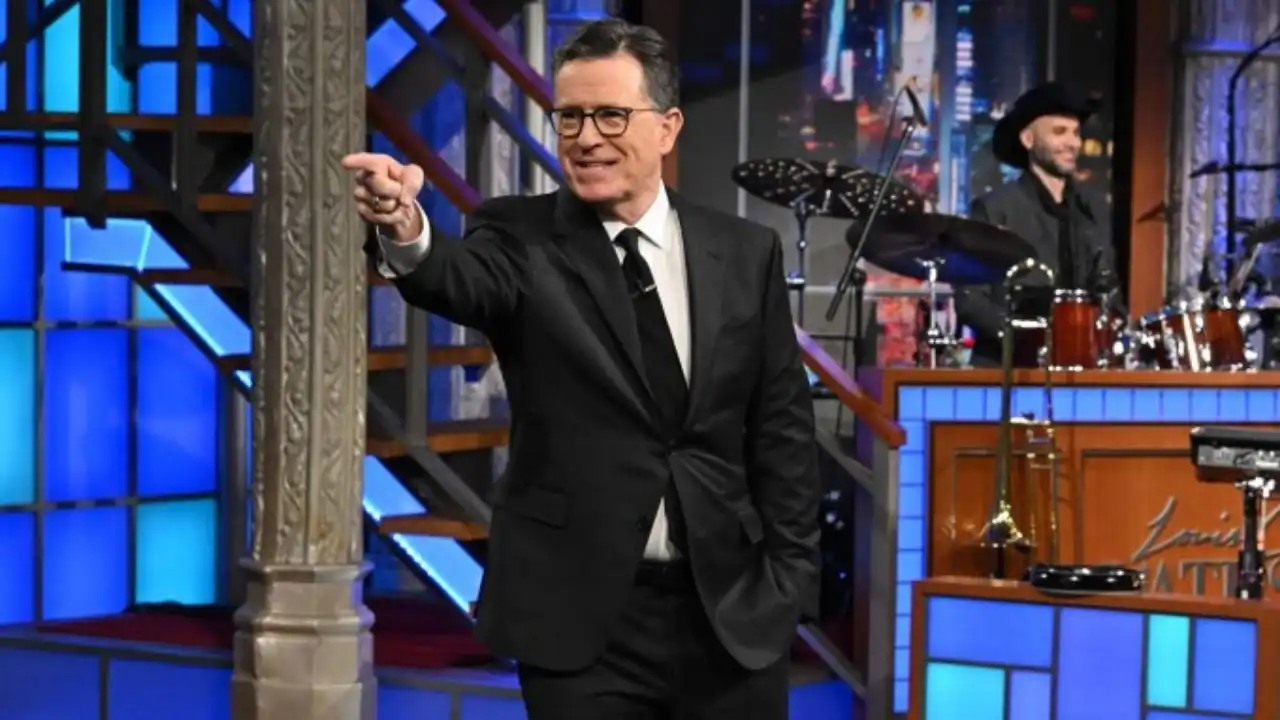
Stephen Colbert says CBS blocked his Senate guest over FCC rules—so he moved the interview to YouTube and fired back on air.
Wait… did a late-night host just say his own network told him to zip it?
That’s exactly what went down when Stephen Colbert revealed that CBS lawyers blocked him from interviewing Texas State Rep. James Talarico — and even warned him not to talk about being blocked.
Yeah. You read that right.
“We Were Told In No Uncertain Terms…”
On Monday night, Colbert opened The Late Show with a twist: the guest who wasn’t there.
He told viewers that Talarico was scheduled to appear, but network lawyers stepped in, citing new guidance tied to the Federal Communications Commission and its so-called “equal time” rules for political candidates.
And then Colbert did what Colbert does best — he turned it into a bit… with bite.
He claimed he was told not only that he couldn’t have Talarico on air — but that he also couldn’t mention the situation.
So of course, he mentioned it.
What’s This “Equal Time” Drama Anyway?
Historically, late-night shows like The Late Show with Stephen Colbert, Jimmy Kimmel Live!, and The View have been exempt from the FCC’s equal time rule for about 30 years.
That rule basically says if you give one political candidate airtime, you have to offer equal time to their opponents.
Now, FCC Chairman Brendan Carr is reportedly reconsidering that exemption, arguing that some talk shows may be operating with partisan motives.
Colbert did not take that lightly.
He openly accused the move of being politically motivated — and suggested it was part of a broader attempt to silence criticism of Donald Trump.
That’s not subtle shade. That’s prime-time flamethrower energy.
The YouTube Loophole
Here’s where it gets interesting.
Colbert said if the FCC doesn’t want political candidates appearing on broadcast TV, fine — he’ll move the interview online.
So he posted the full Talarico interview on the show’s YouTube page, bypassing broadcast restrictions.
No URL. No QR code. Just vibes.
And honestly? That might be the smartest move in the whole saga.
Because here’s the reality: younger viewers are already on YouTube. If anything, this controversy just boosted the clip’s visibility.
Why This Hits Harder Than Usual
There’s another layer here.
CBS has already announced that The Late Show will wrap up its run in May. Meanwhile, its parent company, Paramount Global, is reportedly maneuvering through high-stakes corporate moves — including a pursuit involving Warner Bros. Discovery.
Regulatory approval matters. A lot.
So when Colbert suggests the network is being extra cautious because of political pressure, it doesn’t feel random. It feels strategic.
And strategic TV decisions rarely have anything to do with protecting art. They’re about protecting deals.
Is This “Cancel Culture” From The Top?
During the YouTube interview, Talarico went straight for the jugular, calling it “the most dangerous kind of cancel culture — the kind that comes from the top.”
That’s a loaded statement.
But here’s my take: whether you lean left, right, or somewhere in the messy middle, when comedians and talk show hosts start saying they’re being told what they can’t even mention on air, that should make everyone pause.
Late-night has always pushed boundaries. That’s the job.
If the rules are changing, viewers deserve transparency — not backstage hush orders.
So What Happens Now?
The FCC has reportedly opened inquiries related to talk show appearances, including scrutiny of ABC over an interview with Talarico on The View.
And with 2026 Senate hopefuls like Talarico, Jasmine Crockett, Ken Paxton, and Wesley Hunt all in the mix, this is only getting hotter.
But here’s the bigger question:
If political interviews migrate fully to YouTube and streaming to avoid regulation, does broadcast TV lose its last bit of edge?
Because one thing’s clear — Colbert isn’t backing down quietly.
And if this is how his final months on air play out, buckle up.
What do you think — is this smart regulation, or a slippery slope for free speech on TV? Drop your take below.
