
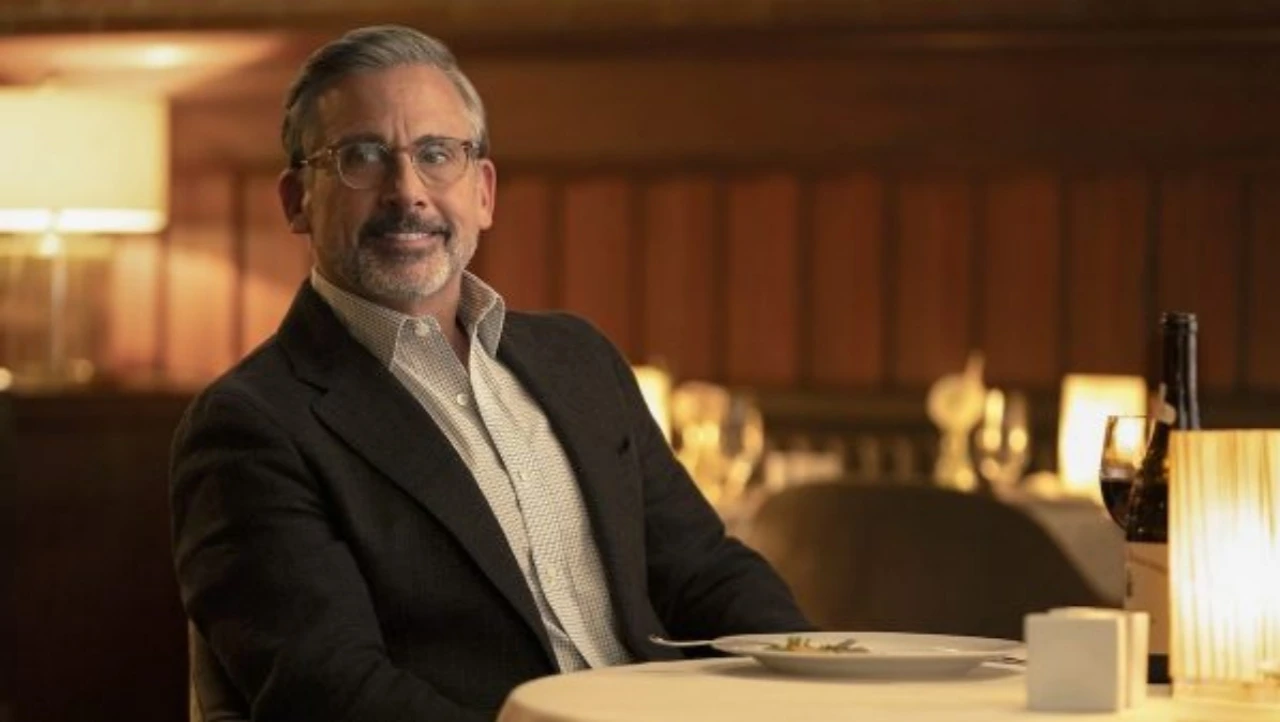
There’s a legitimate dark horse in this year’s Emmy race — and its name is “Rooster.”
HBO Max is already sitting on one of the strongest television slates in recent Emmy memory. Dramas like “The Pitt” and “Task,” comedies like “Hacks” and “The Comeback,” and miniseries including “Half Man” and “DTF St. Louis” have dominated early conversation. But quietly building momentum beneath all of it is a new comedy that industry insiders are increasingly hard-pressed to ignore.
Co-created by Bill Lawrence and Matt Tarses — the team behind “Scrubs” — “Rooster” trades the therapy couches of their Apple TV+ hit “Shrinking” for college lecture halls and professor office hours. Set at a New England university, the ensemble comedy follows Greg Russo, a best-selling thriller writer who finds himself adrift on campus following a spectacularly disastrous speaking engagement — and slowly, clumsily, rebuilding his relationship with his daughter in the process.
At the center of it all is Steve Carell, delivering what many observers are already calling some of the finest work of his career.
Carell occupies a painful corner of Emmy history. During his run on NBC’s landmark workplace comedy “The Office,” he received six consecutive Lead Comedy Actor nominations for his portrayal of Dunder Mifflin regional manager Michael Scott — and lost every single time. His career Emmy total now stands at 11 nominations without a single win, placing him among the most glaring omissions in Television Academy history.
He’s in uncomfortable company. Angela Lansbury holds the record with 18 acting nominations and zero wins. Don Cheadle has 11. Kristen Wiig has 10. “Better Call Saul” star Bob Odenkirk has 7.
“Rooster” hands Carell precisely the kind of role Emmy voters claim to prize — comic on the surface, quietly wounded underneath. His performance lands in that increasingly valued space between comedy and drama that has come to define the modern Emmy landscape.
If there’s a winning path for this show, it runs directly through him.
“Rooster” isn’t a one-man show, and the ensemble is where its awards case gets even stronger.
Danielle Deadwyler delivers a sharp, grounded turn that reaffirms her standing as one of the most respected actors of her generation — an artist who earned BAFTA, SAG, and Critics Choice recognition for “Till” and “The Piano Lesson” while being bypassed by the Academy both times. This cycle, she’s positioned as a rare triple threat: a lead comedy contender here, a guest drama nominee for “Euphoria,” and a guest comedy actress contender for her scene-stealing appearance in Season 4 of FX’s “The Bear.”
Annie Mumolo, the Oscar-nominated co-writer of “Bridesmaids” alongside Kristen Wiig, brings expert comic timing to a potential love-interest role opposite Carell — complete with a sharp tonal twist. British actress Charly Clive, best known for the dark comedy “Pure,” anchors the father-daughter dynamic as Katie, the art history professor whose life Greg keeps stumbling back into.
Phil Dunster, Emmy-nominated in 2023 for supporting comedy actor on “Ted Lasso,” continues his post-Richmond career ascent with a role that weaponizes his natural charm in service of an easy-to-dislike son-in-law while still finding real vulnerability. “Scrubs” veteran John C. McGinley and five-time Emmy nominee Connie Britton — a potential guest contender — round out an ensemble that gives voters multiple entry points into the show.
“Rooster” drew 2.4 million U.S. viewers in its first three days — the most-watched HBO comedy debut in nearly 11 years. HBO renewed the series for a second season before the first had even finished its run.
Lawrence and Tarses have a proven track record with awards voters. Their shows tend to reveal themselves gradually, growing funnier and more resonant with repeat viewings. “Shrinking” followed that exact trajectory on its road to awards legitimacy, and early observers believe “Rooster” is wired the same way — provided HBO commits to the campaign.
Right now, “Rooster” is being whispered about far more than it’s being shouted about. The series lacks the immediate cultural footprint of a splashier, louder title — much like “Barry” and “Silicon Valley” did in their early seasons before word of mouth turned them into genuine Emmy threats.
The Television Academy has a well-documented soft spot for underdog narratives. And Steve Carell winning his first Emmy after more than two decades of defining television comedy — that’s a story voters can get behind.
All it needs is for people to watch.
