
With sharp humor and big heart, Extra Geography turns girlhood, friendship and first longing into a witty, tender British coming-of-age win.
Coming-of-age movies often focus on first love, big mistakes, and that uncomfortable feeling of not knowing who you are yet. But “Extra Geography,” the debut feature from director Molly Manners, looks at growing up from a slightly different angle — one rooted in female friendship, quiet obsession, and the strange intensity of being a teenage girl when everything feels overwhelming and deeply important.
Based on Rose Tremain’s 2007 short story, and adapted by Succession writer Miriam Battye, Extra Geography is less about dramatic twists and more about emotional undercurrents. It’s the kind of film that sneaks up on you — funny, awkward, thoughtful, and deeply relatable in its own understated way.
Told with dry British humor and a soft, almost dreamlike tone, the movie explores how friendship can feel just as consuming, confusing, and fragile as romance.
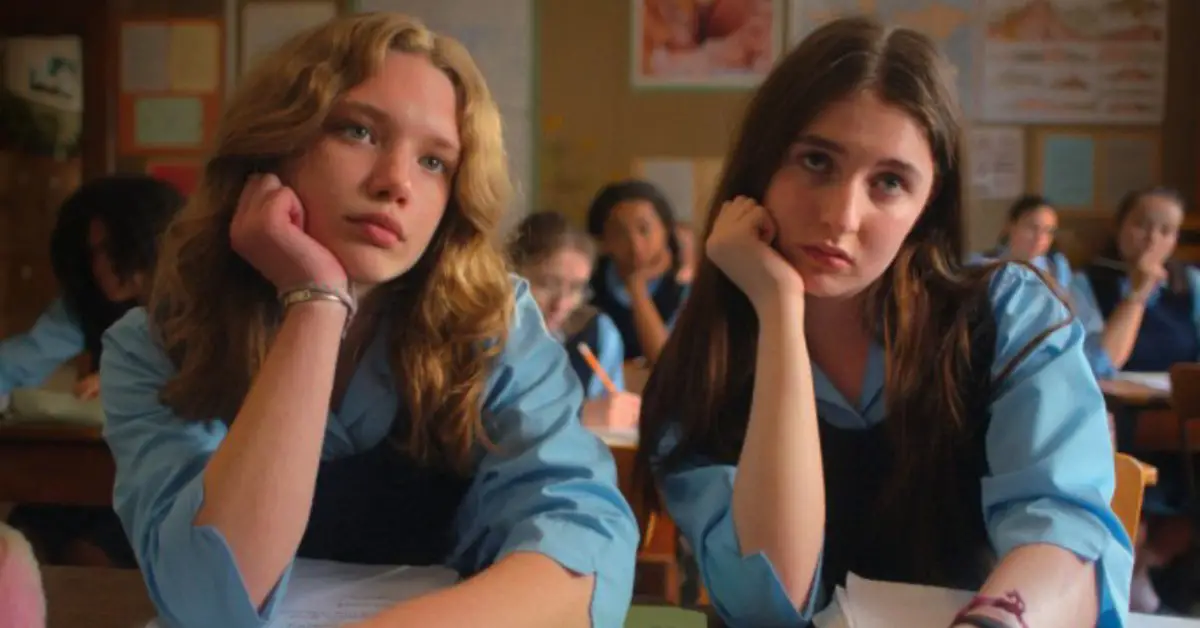
At the center of the story are Flic and Minna, two boarding school students played by impressive newcomers Marni Duggan and Galaxie Clear. From the moment we meet them, it’s clear they exist in their own little world.
They walk the school grounds together with confidence, sarcasm, and an unspoken agreement that they are each other’s whole universe. Everyone else is secondary.
Their conversations are sharp, funny, and often brutally honest. Early on, Minna anxiously wonders what will happen if they don’t get into Oxford or Cambridge. Flic, without missing a beat, dryly responds, “Maybe we’ll just die.” It’s the kind of exaggerated teenage logic that feels hilarious — until you remember how real those fears once felt.
Set in an English boarding school that feels both familiar and timeless, Extra Geography never clearly tells us what year it’s set in. That choice works in its favor. The music ranges from classical pieces to familiar pop tracks like “Crimson and Clover,” giving the film a nostalgic quality that doesn’t belong to any one generation. It feels suspended in time — much like girlhood itself.
Flic and Minna are smart, capable students, but they’re convinced that academic success isn’t enough. To truly prepare for adulthood, they decide they need to become “worldly.” That means two things: exposure to great art and experiencing love. Their plan is as naive as it is earnest.
They audition for a school production of A Midsummer Night’s Dream and decide they will fall in love with the first suitable person they meet.
Things immediately go off track.
When the play’s casting is announced, Minna lands the role of Titania, the Queen of the Fairies — while Flic is cast as a tree. The imbalance stings more than either girl wants to admit, quietly shifting the power dynamic between them.
At the same time, their romantic plan leads them to fixate on their geography teacher, Miss Delavigne, played with nervous warmth by Alice Englert.
The girls’ crush on their teacher is awkward, intense, and handled with remarkable restraint. Rather than turning the situation into something sensational or exploitative, Manners frames it as an extension of youthful confusion — a mix of admiration, curiosity, and misunderstood desire.
Flic and Minna read romance novels, study how love is supposed to work, and steal longing glances, convinced they’re on the verge of something meaningful.
But as rehearsals begin and boys start entering their orbit, cracks begin to show. Their once-unbreakable bond becomes strained by jealousy, insecurity, and the slow realization that growing up doesn’t happen at the same pace for everyone.
What starts as playful codependence quietly shifts into something more painful: the fear of growing apart.
This is where Extra Geography truly shines. The film understands that female friendship during adolescence can feel like a romantic relationship — intense, all-consuming, and devastating when it changes. Duggan and Clear have a natural chemistry that makes Flic and Minna’s bond feel lived-in.
They finish each other’s sentences, mirror each other’s moods, and communicate just as much through silence as they do through words.
Manners structures the film in chapters, almost like a stage play, which gives the story a thoughtful rhythm. Some of the most powerful moments happen without dialogue at all — a look held too long, a shared glance that suddenly feels distant, or the quiet tension of sitting side by side knowing something has shifted.
There’s also a strong sense of empathy running through the film. Even when the girls make questionable decisions, Extra Geography never judges them. Instead, it treats their confusion with kindness, recognizing how overwhelming it is to navigate identity, desire, and loyalty at such a young age.
One line from Flic sums it all up: “I’m stressed about everything and I don’t even know what any of it is.” It’s funny, yes — but it’s also painfully accurate. That feeling of being overwhelmed without fully understanding why is something many viewers will recognize instantly.
In the end, Extra Geography feels like a quiet but confident addition to the growing list of great female-driven coming-of-age films. It shares emotional DNA with movies like Lady Bird, Booksmart, and Frances Ha, but its British sensibility and literary roots give it a voice all its own.
Rather than offering neat answers or dramatic conclusions, the film embraces uncertainty. It understands that girlhood is messy, intense, and fleeting — and that sometimes the most important love story is the one between two friends trying to figure out who they are.
Warm, witty, and deeply human, Extra Geography doesn’t just revisit adolescence — it honors it.
PHOTO CREDIT: Clementine Schneiderman
