
Producers at Unifrance Rendez-Vous in New York reveal how funding systems in France and the U.S. shape which indie films get made.
Independent filmmakers around the world often face the same challenge: finding money to turn an idea into a finished movie. But where that funding comes from—and how it shapes a project—can look very different depending on the country.
At the Unifrance Rendez-Vous in New York this weekend, several producers shared firsthand stories about how films get financed in France and the United States.
Their experiences revealed a clear divide between France’s public-backed support system and the more private, market-driven model common in the U.S.
The panel took place at Film at Lincoln Center as part of the annual event celebrating French cinema.
Producers Julie Billy, Leah Chen Baker, and Stephanie Roush spoke about the complicated paths behind three films: The Little Sister, The President’s Cake, and Union County.
Each project faced a different financial reality, but the conversation highlighted how national systems can shape the kinds of stories that reach audiences.
France’s Public Support System
For Julie Billy, producer of The Little Sister, France’s government-supported funding structure remains essential for helping new filmmakers get their first projects made.
The French system, which is partly funded by a levy on movie tickets, can provide significant support during development. Some projects can receive up to around $580,000 in public funding.
That system has helped France remain one of the most active film-producing countries in the world, with roughly 400 films made each year.
Still, the process can be highly competitive.
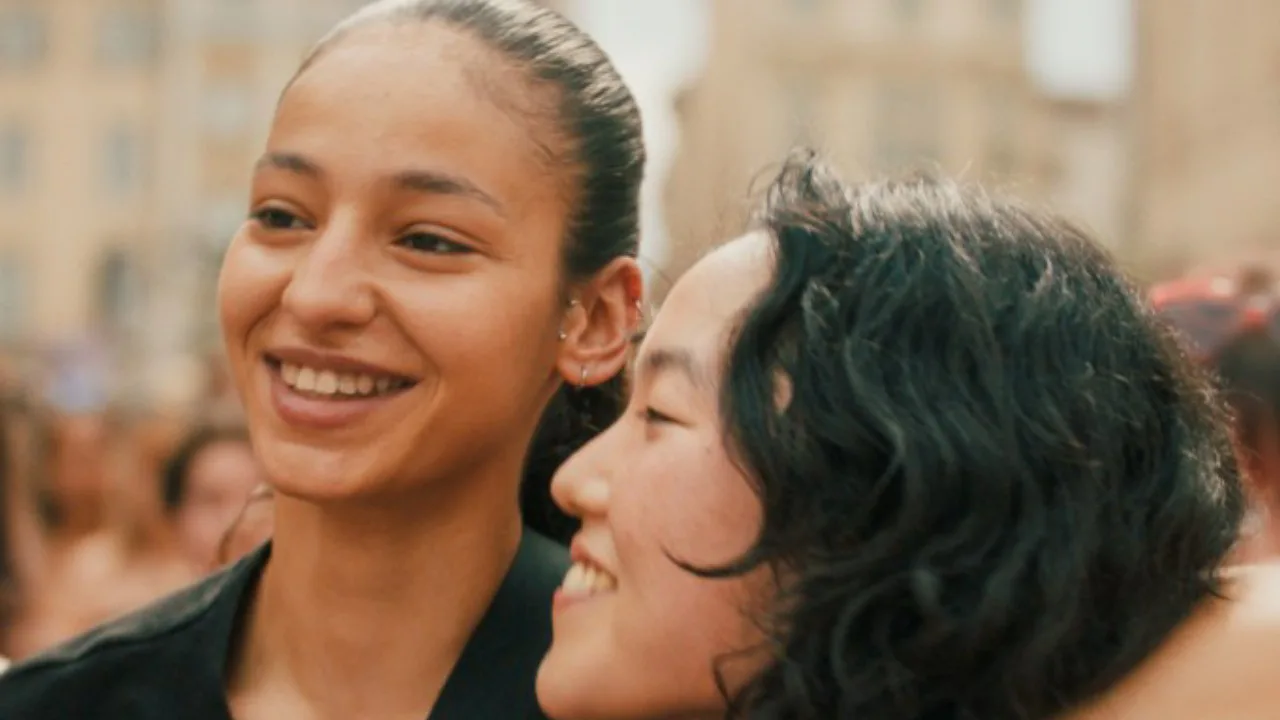
Billy said The Little Sister struggled to secure funding early on. The film, directed by actor-turned-filmmaker Hafsia Herzi and based on a novel by Fatima Daas, follows a young Muslim woman who comes out as a lesbian and struggles to reconcile her identity with her faith.
According to Billy, the project failed to receive development funding from France’s National Film Board (CNC). She suggested the subject matter may have made it a difficult fit for some funders.
Instead, the production turned to international partners.
About half of the film’s roughly $4.5 million budget eventually came from Germany, with broadcasters Arte France and ZDF/Arte joining the project early.
French companies including MK2 Films and distributor Ad Vitam also supported the film, while U.S. distributor Strand Releasing acquired it after its Cannes premiere.
Despite the hurdles, Billy emphasized the importance of preserving France’s cultural funding system.
The model, created after World War II, remains a cornerstone of the country’s film industry and is frequently defended by filmmakers who see it as vital for artistic diversity.
A Talent-Driven U.S. Market
Across the Atlantic, producers face a very different landscape.
Stephanie Roush, who produced the Sundance-premiering drama Union County, described the U.S. market as heavily dependent on recognizable actors.
She recalled that one of the film’s lead financiers initially passed on the project despite liking the script.
That changed only after actors Will Poulter and Noah Centineo joined the cast.
Without well-known talent attached, Roush said it can be difficult for producers to secure attention from investors or distributors.
In the American system, financing decisions are often tied to the perceived audience for a film and which distributors might buy it later.
Producers frequently ask themselves a key question while reading a script: Who is going to watch this movie?
Dramas, Roush noted, can be especially challenging to fund because many investors see genre films—such as horror or thrillers—as safer financial bets.
While there is a dedicated group of independent financiers in the U.S., she described the environment as challenging, particularly for character-driven stories.
Embracing Risk for an Unconventional Film
Leah Chen Baker encountered yet another funding model while producing The President’s Cake, an Iraqi-set drama directed by Hasan Hadi.
The film was shot entirely on location in Iraq using non-professional actors, which made traditional financing structures difficult to apply.
Baker said she quickly realized the project required a different strategy.
Instead of trying to fit the film into conventional co-financing models, she leaned into its unique qualities when pitching it to potential supporters.
The production combined grants, institutional support, and local partnerships, including backing from the Iraqi government.
Programs from the Sundance Institute and the Doha Film Institute also played a major role in building confidence among investors.
Sundance’s labs and mentorship initiatives helped develop the project and introduce it to potential partners.
For Baker, the key was convincing supporters that the ambitious project could realistically be completed despite its unconventional approach.
The producers on the panel are already moving on to new work.
Baker is developing future projects with filmmaker Jamie Dack and working again with Hasan Hadi on a new film titled The Leftover Ladies. Roush is collaborating on upcoming projects with director Theda Hammel and filmmaker Adam Meeks.
Billy is also preparing several productions, including Green Eyes, a new film from the directors of Gagarine, and a project with Icelandic filmmaker Grímur Hákonarson.
The panel concluded with the New York premiere of The Little Sister, followed by a discussion with actress Nadia Melliti.
For the filmmakers involved, the conversation made one point clear: while funding systems may differ across countries, bringing independent stories to life almost always requires persistence, creativity—and sometimes a willingness to take risks.
