
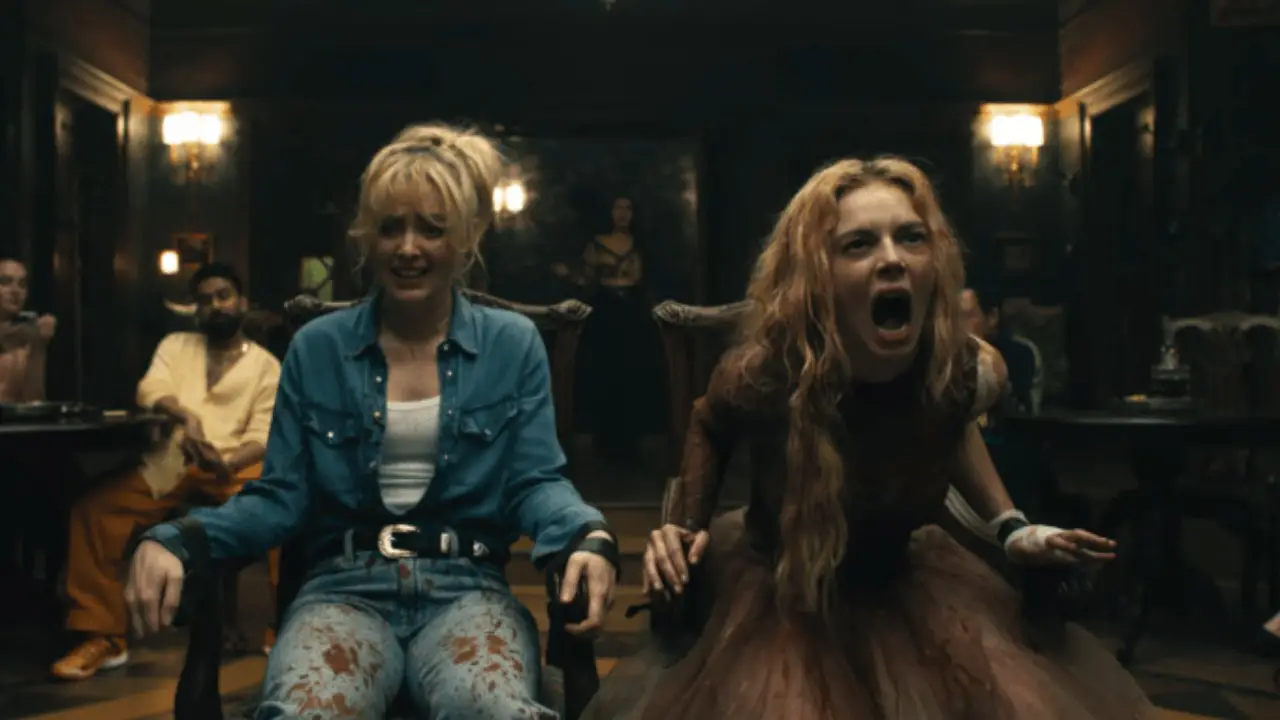
Samara Weaving returns as Grace in “Ready or Not 2,” a louder, bloodier sequel that doubles the chaos and satire of the cult horror hit.
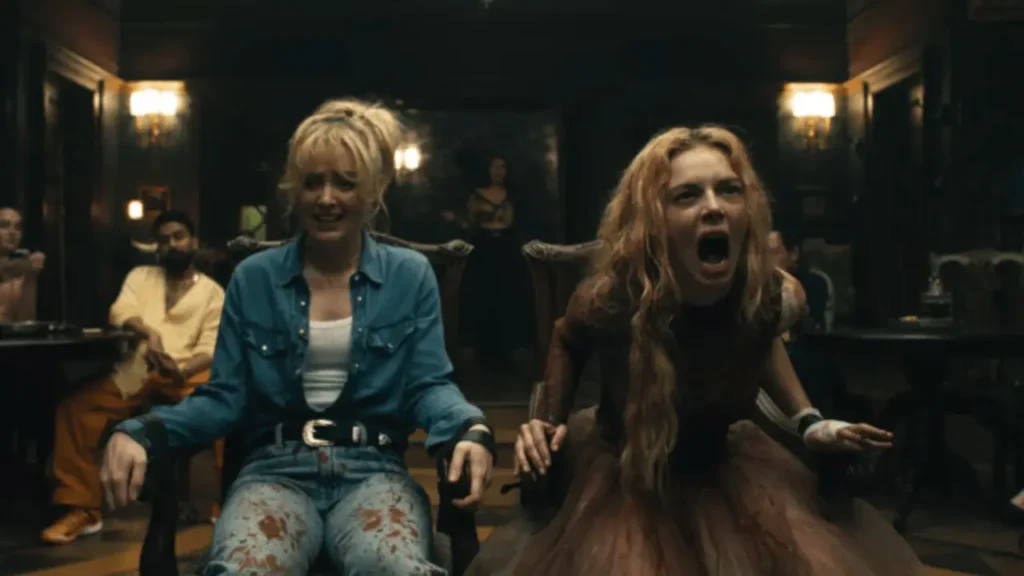
When “Ready or Not” arrived in theaters in 2019, it surprised audiences with a wicked mix of horror, satire, and slapstick brutality.
The film turned a simple premise — a bride forced to survive a deadly game played by her wealthy in-laws — into a cult favorite. Now the sequel, Ready or Not 2: Here I Come, tries to escalate everything: the violence, the absurdity, and the mythology surrounding the secretive elite families behind the game.
The result is a sequel that feels larger, louder, and deliberately outrageous — even if its ambition sometimes pushes it into pure, cartoonish chaos.
At the center of the madness again is Samara Weaving, reprising her role as Grace. In the original film, Grace’s wedding night turned into a bloody survival test after she was forced to participate in a ritualistic hunt run by the powerful La Domas family. Against all odds, she survived.
The mansion burned, the family died, and Grace walked away covered in blood but technically victorious.
The sequel opens right where that story ended.
Grace sits outside the burning mansion, exhausted and wounded, smoking a cigarette while emergency responders rush around her. When asked what happened, she delivers a darkly comic line that sums up the entire first film: “In-laws.
”But survival doesn’t bring peace. Instead, it launches Grace into an even stranger conspiracy.
She wakes up in a hospital under police custody, accused of murder and arson. Just as the situation seems to close in around her, the story veers sharply in another direction. Grace is reunited with her estranged sister Faith, played by Kathryn Newton. Their reunion is tense and messy, reflecting years of distance between the two siblings.
That family drama quickly becomes the least of their problems.
Soon after, Grace and Faith are abducted and brought before a secret council made up of powerful families who once worked alongside the La Domas dynasty. The council reveals that Grace’s survival in the first film triggered another ancient rule tied to the sinister figure who created the original game.
In other words, Grace isn’t finished playing.
The council announces a new challenge: one member from each elite family must attempt to kill Grace before dawn. Whoever succeeds gains immense power within the shadowy network of aristocratic clans. If they fail, Grace herself will take that position.
The premise turns the sequel into something closer to a twisted tournament of assassins.
Unlike the first film, which mostly unfolded inside one sprawling mansion, this story spreads across an entire compound controlled by the council. Each family sends its own representative to hunt Grace, and the movie becomes a chaotic parade of would-be killers, many of them incompetent, bizarre, or simply unlucky.
Some attempts are clumsy, some grotesque, and many are played for dark laughs.
Among the new characters are the rival heirs of the council’s current leader — twins played by Sarah Michelle Gellar and Shawn Hatosy. Their characters bring a mix of cold ambition and ridiculous entitlement to the story, turning them into standout villains.
Another memorable presence is Elijah Wood, who plays the council’s eerily calm lawyer. His character mostly observes the carnage with quiet amusement, as if the entire deadly ritual is nothing more than an elaborate corporate meeting.
There’s also a brief appearance by David Cronenberg, portraying the aging figure who currently holds the council’s highest seat of power.
While the cast clearly enjoys the film’s outrageous tone, the story itself often leans heavily into spectacle over substance.
The relationship between Grace and Faith, for instance, is meant to add emotional weight. Their long separation — sparked by Grace leaving home for college — becomes a recurring argument between them. Yet the conflict sometimes feels exaggerated, especially given that both sisters have apparently lived in the same city for years without realizing it.
Still, the film rarely pauses long enough for those details to matter.
The real focus remains the escalating series of confrontations. The directors, Matt Bettinelli-Olpin and Tyler Gillett, approach each scene like a twisted action puzzle. Characters collide in brutal fights, traps go wrong, and the body count climbs steadily as the night continues.
One standout moment features two violent duels happening simultaneously — one involving Grace battling a jealous rival connected to the original La Domas family, while elsewhere another character reveals his murderous ambitions. The sequence unfolds with operatic absurdity, turning what could be simple horror into something closer to dark comedy.
The movie eventually builds toward a bizarre final act set during a satanic wedding ceremony, where ritual, power, and violence collide in a scene that feels intentionally excessive.
For fans of the original film, the sequel delivers exactly what it promises: more blood, bigger stakes, and an even more exaggerated portrait of corrupt elites manipulating deadly traditions for their own gain.
Whether that makes the film better is another question.
The first movie succeeded largely because of its tight setting and simple structure. By expanding the story into a wider conspiracy, the sequel sometimes loses that focus. Instead of a clever survival thriller, it often feels like a chaotic spectacle built around outrageous moments.
Yet the film’s energy — and Weaving’s fearless performance — keeps it entertaining.
Grace has evolved from terrified bride into something closer to a battle-hardened survivor. Weaving plays her with a mix of exhaustion, anger, and dark humor, turning the character into the kind of horror heroine who can carry even the most absurd plot twists.
Ultimately, Ready or Not 2: Here I Come aims squarely at midnight-movie audiences who enjoy horror that doesn’t take itself too seriously.
It may not recapture the clever simplicity of the original, but it embraces its ridiculousness with enthusiasm. And in today’s horror landscape — where audiences often crave bigger, wilder experiences — that might be exactly the point.
If the franchise continues with a third installment, the challenge will be finding new ways to expand its twisted world without losing the sharp, satirical bite that made the first film memorable.
