
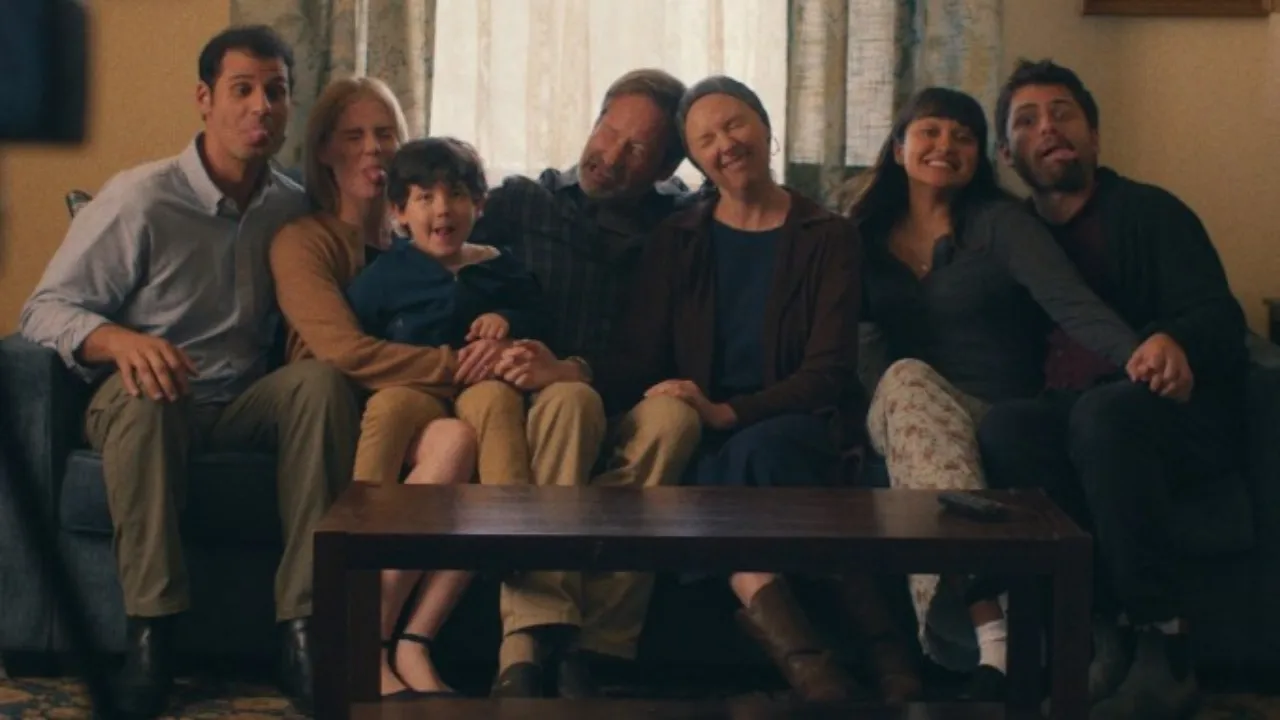
A new indie film explores how one family survives loss, using humor, honesty, and messy love to face grief without easy answers.
Grief doesn’t arrive with a rulebook, and See You When I See You understands that from its very first moments.
Directed by Jay Duplass and written by comedian Adam Cayton-Holland, the film takes a deeply personal story of family loss and turns it into a quiet, emotionally open look at how people stumble forward after tragedy.
The story centers on Aaron, played by Cooper Raiff, a young man undone by the death of his sister Leah. Aaron isn’t heroic or graceful in his mourning. He drinks too much, pushes people away, and obsesses over his own guilt.
Raiff leans into those rough edges, making Aaron feel painfully real — the kind of person who wants comfort but doesn’t know how to accept it.
Unlike many grief-driven movies that aim for sweeping catharsis, See You When I See You stays small. The pain is domestic and personal. It lives in tense family dinners, unfinished conversations, and the awkward silence between siblings who love each other but don’t speak the same emotional language.
Lucy Boynton plays Emily, Aaron’s surviving sister, with a quiet strength that never tips into sentimentality. Emily is grieving too, but she’s also holding the family together. Her frustration with Aaron feels earned, not cruel. Their dynamic captures a hard truth: loss doesn’t bring people together automatically.
Sometimes it pulls them apart first.
David Duchovny and Hope Davis portray the parents, each coping in their own guarded way. Duchovny’s reserved performance suggests a father who believes staying functional is the same as staying strong. Davis brings depth to Page, a mother carrying private fears of her own while trying to support her children.
The film doesn’t frame any of these responses as “wrong.” It simply lets them exist.
Cayton-Holland, known for his sharp comedy instincts, doesn’t abandon humor here — but he uses it carefully. Aaron runs a comedy website, and his jokes grow darker as his grief deepens. The laughs don’t erase the sadness; they sit beside it.
This approach reflects a reality many people know well: sometimes humor is the only language left when everything else fails.
Jay Duplass’ direction favors emotional honesty over polish. The film doesn’t chase stylish visuals or big dramatic turns. Instead, it focuses on conversations, expressions, and moments that feel lived-in.
Flashbacks to Leah, played by Kaitlyn Dever, show her as spontaneous and magnetic, but also filtered through memory — imperfect, idealized, and fragile.
At times, the movie feels almost uncomfortably intimate, like listening in on a therapy session. Aaron resists healing, avoids rituals, and even rejects a funeral. His refusal isn’t framed as bravery, but as fear.
The film understands that grief doesn’t move in straight lines, and closure is not a single moment you arrive at and stay.
What makes See You When I See You stand out is its sincerity. It doesn’t promise that naming your pain will fix everything. It doesn’t suggest that love automatically heals all wounds.
Instead, it offers something quieter and more honest: the idea that surviving loss is about learning to live with unanswered questions.
The film may not surprise viewers who are familiar with grief-centered indie dramas, but its heart is unmistakable. Duplass and Cayton-Holland aren’t chasing clever twists or easy tears.
They’re telling a story meant to feel familiar to anyone who has ever lost someone — or lost themselves along the way.
In the end, See You When I See You isn’t about getting over grief. It’s about making room for it, learning how to carry it, and slowly finding your way back to the people who matter most.
For audiences willing to sit with that discomfort, the film offers something rare: understanding without judgment, and hope without pretending everything will be okay.
PHOTO CREDIT: Jim Frohna
