
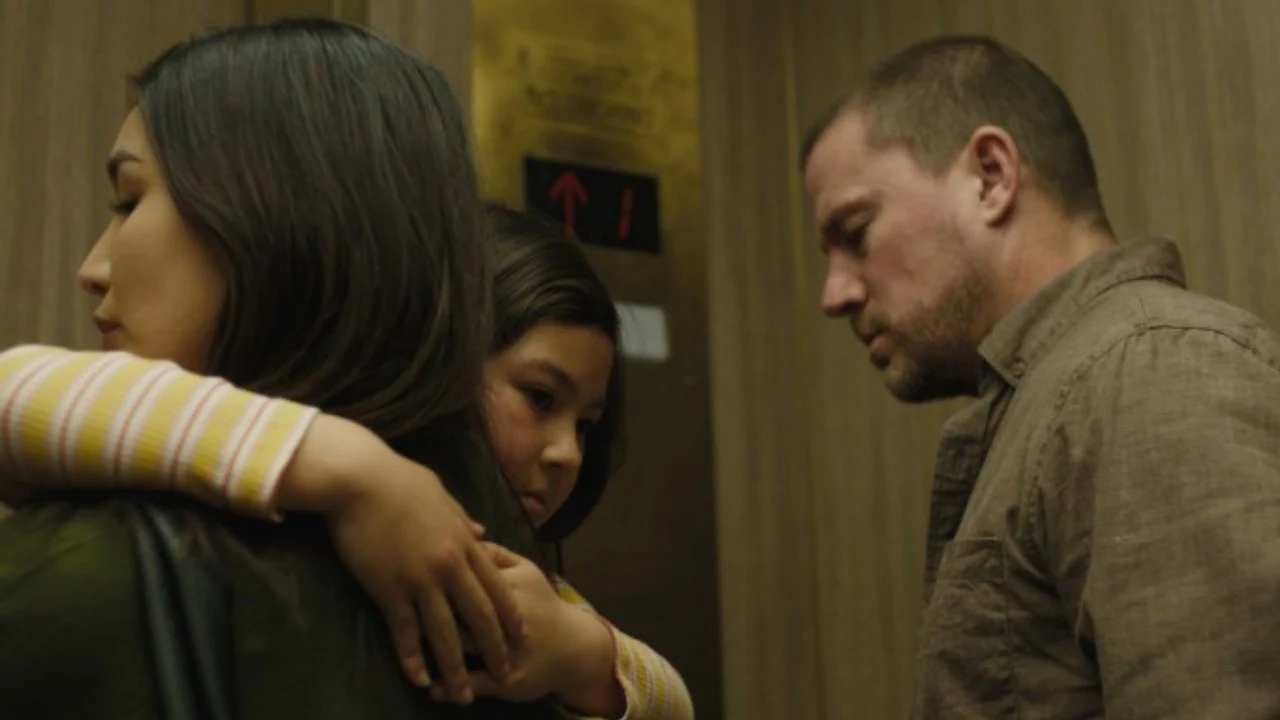
Gemma Chan reveals how a real-life trauma shaped her powerful new film “Josephine” and why the story felt deeply personal.
When Gemma Chan first read the script for Josephine, she didn’t see it as just another role. She saw something uncomfortably familiar.
The British actress — known to global audiences for Crazy Rich Asians and Marvel’s Eternals — says the story of a mother guiding her young daughter through the aftermath of witnessing violence hit her “right in the gut.”
And that’s because Chan has lived through something similar herself.
In director Beth de Araújo’s Sundance breakout Josephine, Chan plays Claire, a mother trying to protect her 8-year-old daughter after the child witnesses a brutal rape in a San Francisco park. The case depends on whether Josephine, played by newcomer Mason Reeves, can testify in court.
Claire and her husband Damien — portrayed by Channing Tatum in one of his most vulnerable turns — wrestle with an impossible question: Is telling the truth worth the emotional cost?
For Chan, that dilemma wasn’t abstract.
In 2012, she witnessed a fatal stabbing in London and later made the brave decision to testify in court. The memory stayed with her. So when the script for Josephine landed in her inbox in 2019, she immediately felt a connection.
“It really hit a raw nerve,” Chan has shared in interviews. “The world can be a very dangerous place. I know that firsthand.”
That lived experience became the emotional backbone of her performance. Rather than leaning into dramatic outbursts, Chan delivers a restrained, quietly devastating portrayal. Much of Claire’s inner turmoil plays out in her eyes — fear, doubt and fierce love all battling beneath the surface.
Those who saw the film at the Sundance Film Festival felt it too. Josephine became one of the festival’s biggest breakouts, winning both the Grand Jury Prize and the Audience Award — a rare double victory that signaled critics and viewers were on the same page.
But getting there was anything but easy.
After Chan signed on as the first cast member in 2019, the COVID-19 pandemic halted production. Director de Araújo went on to make her feature debut with the 2022 thriller Soft & Quiet, while Josephine remained in limbo.
Still, Chan couldn’t let it go.
By spring 2024, filming finally began, thanks in part to producer David Kaplan — and to Chan and Tatum stepping in as producers themselves. Chan has described the project as a “small miracle,” saying she did everything she could to help it move forward.
On set, she found an environment that encouraged honesty over theatrics. Nothing felt forced. Instead, the cast focused on emotional truth — especially opposite Reeves, who had never acted before being discovered at a farmer’s market.
Reeves, now the heart of the film, brought what Chan calls a rare authenticity. “There was no artifice,” she has said. “She’s wise beyond her years.”
That authenticity extends to the film’s central question: How do we help young people process the violence of the world?
It’s a theme that feels painfully timely. Rather than sensationalizing trauma, Josephine explores how families cope with it — the silences, the arguments, the protective instincts that sometimes clash with the pursuit of justice.
For Chan, that emotional complexity is what makes the film resonate. It isn’t about courtroom drama alone. It’s about fear. About responsibility. About holding onto humanity when circumstances try to strip it away.
Following its Sundance triumph, the film was acquired for U.S. distribution by Sumerian Pictures, a newer company eager to give the project a thoughtful rollout. International buyers are now watching closely as the film heads to the Berlin Film Festival.
Awards buzz is already building, but for Chan, the most meaningful moment came during that first Sundance screening.
Sitting in the dark theater, she felt the audience breathe with the film — gasp at certain scenes, sit in silence during others. When the credits rolled, the relief was overwhelming.
Because for her, Josephine isn’t just a movie. It’s a reflection of a moment in her own life — and a reminder that even in the face of trauma, courage can take many forms.
Sometimes, it’s as simple — and as powerful — as telling the truth.
