
Super Bowl halftime turned into more than music this year—it became a mirror of America’s cultural divide, from unity to outrage.
When the Super Bowl halftime moment arrived, it wasn’t just a concert—it was a cultural crossroads.
On one side was the official show, led by Bad Bunny, an artist whose global stardom is built on Spanish-language music, joy, and community. On the other was an unofficial, livestreamed “All-American Halftime Show,” organized by Turning Point USA, framed as a patriotic alternative.
Together, they revealed how differently Americans now define representation, pride, and entertainment.
Bad Bunny’s performance leaned into storytelling rather than spectacle alone. The show highlighted everyday people, shared celebrations, romance, and movement—scenes that felt intimate and familiar even to viewers who don’t speak Spanish. The message was clear without being loud: America is made up of many cultures, and that mix is worth celebrating.
The closing visual, emphasizing love over hate, landed softly but firmly, and for many fans, it summed up the night’s emotional core.
Meanwhile, Turning Point USA’s parallel broadcast aimed to capture viewers who felt alienated by the official show. Marketed heavily with merchandise plugs and calls to “get involved,” the event featured a lineup of country and rock artists performing in a stripped-down, patriotic setting. For supporters, it was meant to feel like a return to tradition.
For critics, it came across as more political statement than musical event.
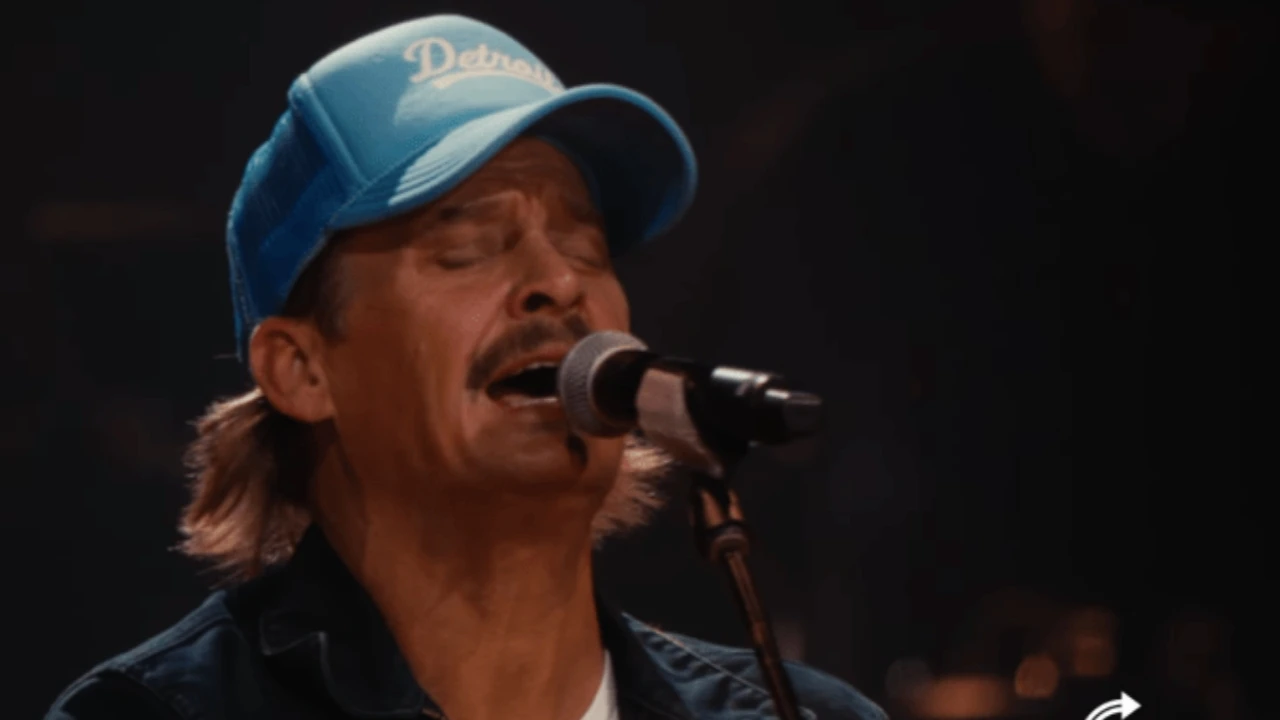
Kid Rock’s appearance became the most talked-about moment of the alternate show. A seasoned performer with undeniable stage confidence, he delivered flashes of energy and nostalgia. Still, the performance felt uneven, and its tone shifted repeatedly—from party anthems to solemn ballads—leaving some viewers unsure what the show wanted to be.
The night ultimately highlighted how hard it is to manufacture cultural moments through opposition alone.
What stood out most wasn’t who “won” halftime, but how clearly the contrast reflected a larger national mood. One show focused on inclusion and shared humanity; the other leaned into identity and resistance. Both claimed patriotism in their own way.
As reactions poured in online and from political figures, it became obvious that halftime had moved beyond football. It became a stage for values, emotions, and competing ideas of what America looks and sounds like today.
In the end, millions watched, argued, laughed, and scrolled. And maybe that’s the most American part of all: different voices, different tastes, all tuned in to the same moment—just hearing it very differently.
PHOTO CREDIT: Turning Point USA
